

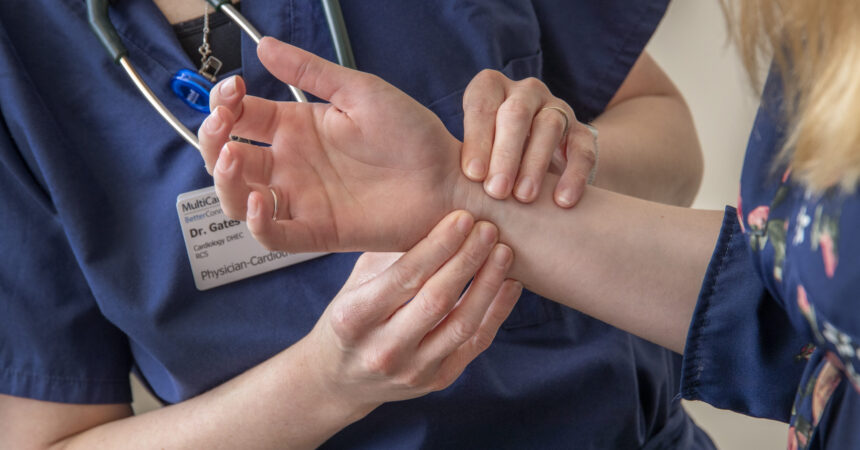


Pulse Heart Institute’s Inland Northwest Heart Failure Team has reduced readmission rates for heart failure patients to some of the lowest in the country — and sustained those rates for four years running.
Heart failure is a significant and growing problem in the United States, affecting millions of adults. It is the leading cause of hospitalization for patients 65 and older. The national readmission rate — the number of patients who will be readmitted to the hospital within a 30-day window — is a staggering 25 percent for heart failure patients.
The quality of life and high mortality rates associated with even one hospitalization are a major concern. Additionally, readmissions have a high financial burden on the patient, insurance companies and health care systems.
A change in care
Understanding that improving a patient’s quality of life starts at home, Pulse Heart Institute’s INW Heart Failure Team partnered with DispatchHealth — and other local community agencies — in 2021 to create a new heart failure-specific collaboration. The initiative, called “Heart Failure at Home,” aims to decrease the readmission rate among heart failure patients.
The initiative includes the patients, making them important actors in their own health. Based on symptom parameters, patients understand when to contact Pulse Heart Institute for help. After a detailed telephone triage, any patient needing attention sooner than clinic availability is seen by DispatchHealth instead of having to go to the emergency room.
DispatchHealth providers, trained in emergency medicine, treat patients in need, on-demand and at home, seven days a week, 8am to 10pm, including weekends and holidays, to address their immediate needs and avoid hospital readmission.
Pulse Heart Institute’s Heart Failure Center of Excellence director, Rob Bramlett, explains that heart failure patients are willing participants in their own care journey.
“Our patients are not reluctant about any of our therapies or partners because we thoroughly explain all aspects of their continued care and include them in decision making,” he says.
Because of the collaboration and ability to reach patients needing time-sensitive treatments at home, Pulse Heart Institute cut its 30-day hospital readmission rate by more than 50 percent in the first year of the collaboration. This was down from an already impressive 15.87 percent to an unprecedented 6.82 percent, significantly lower than the national average (25 percent).
To further these efforts, in 2020 the team also launched a robust CardioMEMS program. CardioMEMS is an implanted device that allows heart specialists to remotely monitor pressure changes indicative of worsening heart failure well in advance of physical symptoms. The information from a CardioMEMS device can help providers treat heart failure symptoms before a hospitalization occurs.
The INW Heart Failure Team’s efforts have paid off. With Heart Failure at Home, DispatchHealth and the CardioMEMS program, the team further reduced the readmission rate from greater than 20 percent in 2020 to less than 4 percent in 2023 and 2024.
Adding increased collaboration between the INW Heart Failure Team and MultiCare Deaconess Hospital, the hospital readmission rate dropped from 11.22 percent (Q1 2024) to 5.68 percent through Q1 2025. This has improved quality of life for heart failure patients and has been an overall cost savings to MultiCare.
A change in thinking

While these initiatives were critical to the success of the heart failure team, there is an intangible piece of their programming that has also been instrumental in decreasing readmissions: a shift in thinking by the care teams.
“Our success is not due to just one thing; it’s more how we think about our patients,” explains Jon Clifton, heart failure outpatient nurse navigator. “Many patients we deal with, their lifestyle may not be the same as ours. It’s accepting that for what it is and working with the patient where they are, physically, mentally and emotionally.
“Our care plans need to fit the patient’s lifestyle, and we need to figure out how to adapt care to each individual patient’s needs,” he continues. “It’s a philosophy, a thought process: What can I do to have a positive impact?”
Clifton has helped his teams shift their thinking, seeing the patient’s big picture and determining the resources they need to be successful. Thinking about the patient’s situation as a whole and figuring out what they can do to improve their overall quality of life has had an immeasurable impact on reducing readmissions for this vulnerable population.
The success of these programs and of Clifton’s heart failure team caught the attention of Deaconess Chief of Staff Meghan Roberts, MD. Roberts was eager to partner with the team and has been a champion of their work, even making 50 percent of the hospitalist providers’ annual goals heart failure-related.
“Our team has a great relationship with Pulse cardiology,” Roberts says. “I was inspired by the passion of the heart failure team; they bring an energy and dedication to patient care that made me want to take part in these initiatives.
“The hospitalist team in INW is always eager to tackle new projects that drive care improvement,” she continues. “When presented with data, clinicians are driven to learn and follow best practice. There are not too many clinical entities where small interventions can quickly improve symptoms. When you combine data with seeing happy patients and improved quality of life, clinicians want to be part of the solution.”
A change in outcomes
These extraordinary results offer a window into the potential for dramatically improving the lives of millions — heart failure patients and their loved ones.
They also demonstrate a potential pathway to support health care systems that are stretched thin. Developing partnerships with community agencies relieves some pressure from hospitals by providing important support and care for patients at home — before they need a hospital admission. This mindset of addressing the needs of the patient as a whole and meeting them where they are — both physically and emotionally — serves patients beyond their clinical diagnosis.
“Heart failure impacts patient care across so many segments of the population,” says Roberts. “There are some very specific and actionable pathways in heart failure that can truly improve outcomes. It’s gratifying to be able to provide care that enables people to be home more.”
The success of the Heart Failure at Home program has led to two additional programs designed to further reduce the risk of rehospitalization. Those programs, currently in development, should help sustain the low readmission rates among INW heart failure patients while strengthening MultiCare’s ties with community-based care programs.
The Hospital to Home Bridge program (currently being piloted at Deaconess Hospital) is designed to sooner discharge heart failure patients from the hospital, supporting them with additional post-discharge at-home visits to ensure their medications are well titrated and their labs are within normal range, while giving them an opportunity to ask questions.
The ED to Home program is designed for patients who are in the hospital emergency department awaiting a bed but are relatively stable. These patients can be discharged home, and DispatchHealth follows up within 48-72 hours, with a second follow-up the next day if needed.
Each of these programs is being developed with the goal of adding value to a patient’s care while maintaining their dignity and respect and improving lives. If successful, the programs may also be replicable for other chronic diseases — furthering the impact of the model the Pulse INW Heart Failure team has created.
With inquiries about their success coming in from health care systems across the nation, the heart failure team is excited about the possibilities and energized to continue this important work.
Clifton summed up the team’s drive to continually improve programs and patient outcomes: “What are we here for? To improve patient’s lives. Let’s figure out how to do that.”
Inland Northwest 509-755-5500
Puget Sound Region 253-572-7320